An AI-friendly product detail page (PDP) does five things: it is readable by AI, shoppable by AI, backed by original proof, clear about who and what the product is designed for, and built on expertise from the people who made it. In practice, that means product facts in the page’s HTML and structured data, feeds that match the page, and test results, use cases, and design reasoning no competitor can copy.
I'm Kara Lineal, a marketing executive for consumer products, B2C, D2C, and B2B brands that want AI built into marketing operations. I have more than 20 years of experience building consumer brands and D2C e-commerce, including a D2C channel built to $5M at 65% margin, and I now apply agentic AI to the work.
The product detail page (PDP) used to have one job: convince a shopper who had already found the product to buy it.
Now it has a second audience. Before many shoppers ever see your page, an AI assistant has already read it, compared it to competitors, and decided whether to recommend it.
That assistant might be Google's AI Mode, ChatGPT, or a retailer's shopping assistant like Amazon's Alexa for Shopping (formerly Rufus). Amazon has said its assistant answers questions based on "product listing details, customer reviews, and community Q&As." OpenAI says ChatGPT's shopping results draw on structured metadata such as price and product description, and rank merchants on factors like "availability, price, quality, and whether they are the maker or primary seller of that item."
In other words, the PDP is now the source material AI uses to recommend or exclude your product.
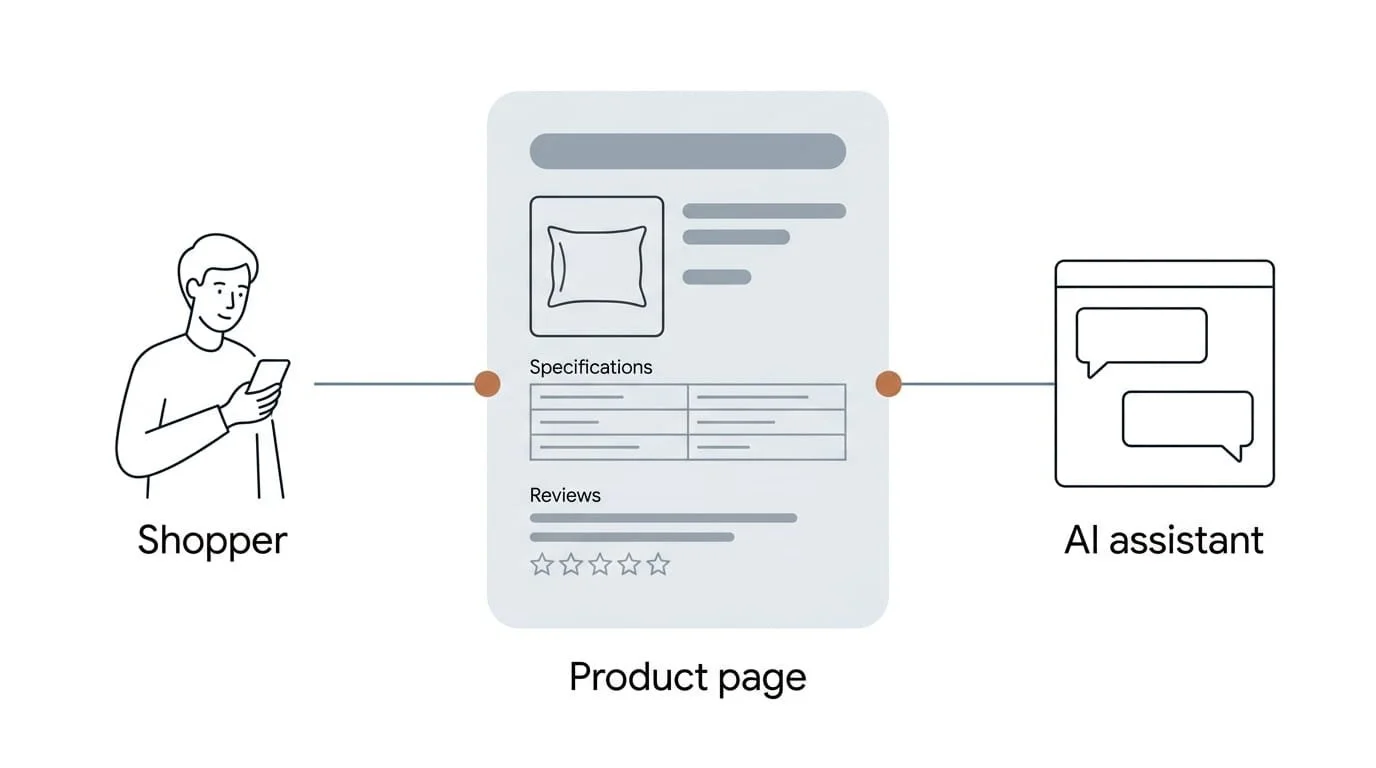
Most PDPs aren't ready. Adobe's April 2026 analysis found that AI could read only 66% of the content on retail product pages, lower than homepages or category pages. Baymard Institute's 2026 benchmark found that up to 62% of leading e-commerce sites have "mediocre" or worse product page experiences on mobile.
I started my career as a product designer, creating products and packaging for mass retail. I've seen firsthand how much of a product's value lives in decisions that never make it onto the page. The new PDP needs to capture that value in a form both shoppers and AI can use.
Why the PDP matters more now
The stakes on product content have always been high:
Salsify's 2026 research with 2,712 shoppers in the U.S., Canada, and the U.K. found that 45% had returned an online purchase because of incorrect or misleading product information.
Salsify's 2025 research found that 54% of shoppers had abandoned a sale because product content wasn't consistent from one channel to the next.
Northwestern University's Spiegel Research Center found that the purchase likelihood for a product with five reviews was 270% greater than for a product with no reviews.
AI raises those stakes. When a shopper asks an assistant to compare products, incomplete or inconsistent product data doesn't just lower conversion. It can remove you from the answer.
And the shoppers AI sends are valuable. Adobe reported that in March 2026, AI-referred traffic to U.S. retail sites converted 42% better than other traffic.
The five parts of the new PDP
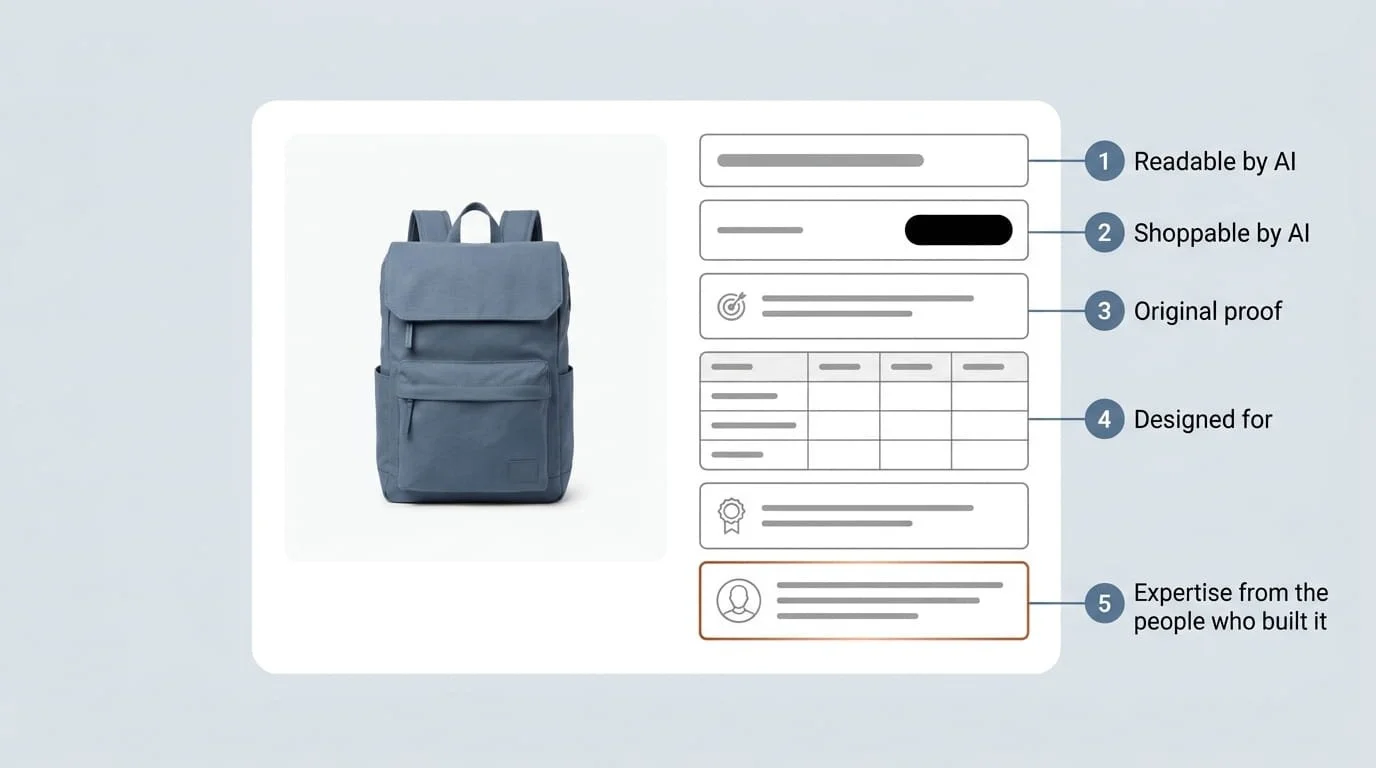
An AI-friendly product page does five things well:
It is readable by AI.
It is shoppable by AI.
It includes original proof.
It states who and what the product is designed for.
It includes expertise from the people who built it.
1. Make it readable by AI
If AI can't read your product information, it can't recommend your product.
Put the facts in the page, not behind scripts
Many PDPs load specifications, prices, reviews, and FAQs with JavaScript or hide them in tabs. Many AI crawlers don't render JavaScript, so that content may be invisible. Work with your e-commerce team to make sure critical product information is in the page's HTML when it loads.
Structure the content
Use a clear product title with brand, product type, and key differentiator.
Put specifications in a real HTML table, not an image.
Use headings for each content section: overview, specifications, use cases, care, compatibility, and FAQs.
Write descriptive alt text for product images.
Add product structured data
Google's Product structured data documentation describes merchant listing markup for pages where customers can buy, with options for "detailed product information, like apparel sizing, shipping details, and return policy information." It also notes that product variant markup "can help Google better understand which products are variations of the same parent product."
Google recommends using both page markup and a Merchant Center feed: "Providing both structured data on web pages and a Merchant Center feed maximizes your eligibility to experiences and helps Google correctly understand and verify your data."
That matters because Google's Shopping Graph, which powers its shopping experiences, includes more than 50 billion product listings, 2 billion of which are updated every hour.
2. Make it shoppable by AI
AI assistants increasingly help shoppers take the next step: checking availability, comparing prices, or starting checkout. Your PDP needs to support that.
Show price and availability clearly on the product page, in the HTML and in structured data.
State shipping, delivery times, and return policy on the page, not only in the cart or a footer link.
Use standard identifiers such as GTIN, UPC, MPN, and SKU so AI can match your product across retailers and feeds.
Name variants clearly. Size, color, and configuration options should each have clear labels and, where possible, their own identifiers.
Keep product feeds current and consistent with the page. If your feed says in stock and your page says backordered, AI has a reason to trust a competitor.
Label buttons and options clearly so AI browser agents can select a size and add to cart.
3. Include original proof about the product
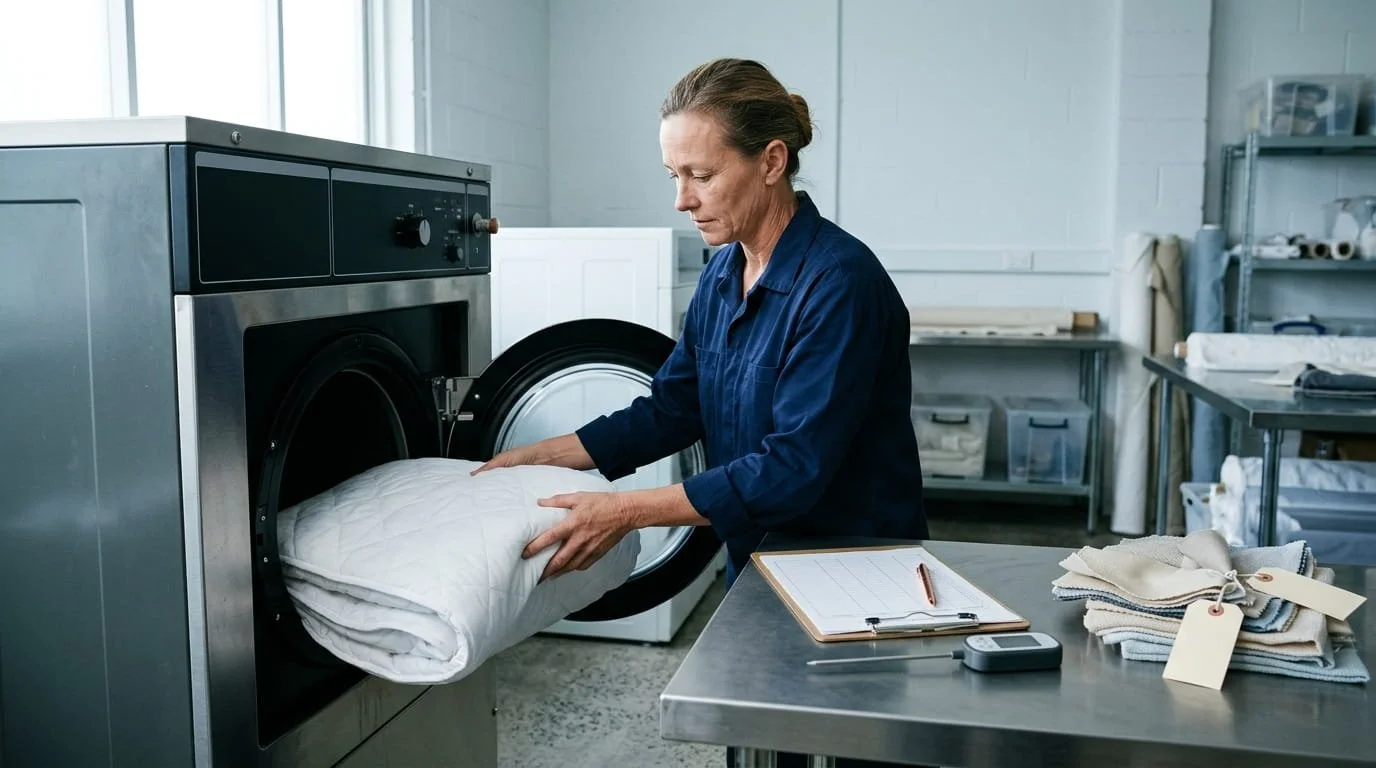
Every competitor says their product is durable, easy to use, and high quality. AI assistants are designed to look past claims to evidence.
Google's guidance for reviews offers a useful standard. It asks reviewers to "provide evidence such as visuals, audio, or other links of your own experience" and to "share quantitative measurements about how something measures up in various categories of performance." Apply the same standard to your own product content.
Types of original proof to add:
Test results: Load ratings, drop tests, wash cycles, battery life, temperature ranges, or lab certifications, with the test method described
Comparison data: How the product measures against the previous version or a common alternative, with specifics
Real-use photos and video: The product being installed, used, cleaned, or in a real environment, not only on a white background
Customer reviews and Q&A: Enough volume to be credible, with responses from your team to common questions
Certifications and standards: NSF, UL, ENERGY STAR, FDA compliance, or industry-specific standards, with certificate numbers where appropriate
Awards and third-party coverage: Design awards, trade publication reviews, and editorial features
On today's PDP, that proof should be visible to the shopper and readable by AI.
4. State who and what the product is designed for
AI shoppers ask questions with context. "What's the best vacuum for a small apartment with two dogs?" "Which floor drain brush is approved for dairy processing?" "What luggage fits carry-on limits for international flights?"
If your PDP doesn't state who the product is for and what situations it fits, AI has to guess, or it recommends a product whose page says so directly.
Add a clear "Designed for" section:
Who it's for: "Designed for commercial kitchens with high-temperature sanitation cycles" or "Designed for families who need a stain-resistant mattress protector for kids' rooms"
Use cases: The specific situations, environments, and tasks where the product performs best
Who it's not for: Being honest about limits builds trust and reduces returns. "Not recommended for outdoor use" is useful information.
Compatibility: Which models, systems, sizes, or accessories it works with
How to choose: If you sell several versions, explain which one fits which buyer
This content matches the way people ask AI assistants for recommendations, and it gives AI a clear reason to match your product to the right buyer.
5. Include expertise from the people who built it

The most underused asset in product marketing is the knowledge of the people who designed, engineered, sourced, or tested the product. As a product designer, I knew why every material, dimension, and feature was chosen. I knew which customer complaint a design change solved and which tradeoff we accepted to hit a price point. Almost none of that knowledge made it to the shelf or the product page.
Google's review guidance suggests covering key decision-making factors and how a product differs from competitors. Your product team already knows those answers. Put them on the page:
"The problem we set out to solve": A short statement from the product developer on the customer problem behind the product
"Why we designed it this way": The reasoning behind key materials, features, and specifications
Expert tips: Installation advice, care instructions, or usage tips from the product manager or engineer
Named experts: Include the person's name, title, and experience, linked to an expert bio page
Expert answers in Q&A: Have product specialists answer customer questions directly, with their name and role
This content does three things. It gives shoppers confidence. It gives AI original information no competitor can copy. And it shows the first-hand experience and expertise that Google's guidance says helpful content should demonstrate.
A before-and-after example
Here's how a typical product description changes when it's rewritten for shoppers and AI. The example is a hypothetical commercial floor drain brush.
Before: "Our heavy-duty drain brush delivers superior cleaning performance. Built tough for demanding environments. Available in multiple sizes."
After:
Designed for: Food and beverage plants cleaning floor drains 3 to 6 inches in diameter during daily sanitation.
Problem it solves: Standard brushes shed bristles that can end up in drains and product areas. "We use a one-piece molded construction so bristles stay in place under repeated hot-water and chemical cleaning," says the product manager, who spent 12 years in plant sanitation before joining the company.
Proof: Bristle retention tested through 500 wash cycles at 180°F. Materials meet FDA requirements for food contact.
Not for: Drains smaller than 3 inches. See the 2-inch model.
Specifications: Listed in a table with handle length, head diameter, bristle material, temperature rating, and color options.
The "before" version could describe any brush. The "after" version answers the questions a sanitation manager would ask an AI assistant, with details only the manufacturer can provide. (The specifics above are illustrative; use your own verified data.)
The new PDP checklist
| Section | What to include | Why it matters for AI |
|---|---|---|
| Title and overview | Brand, product type, key differentiator, one-sentence summary | Helps AI identify and categorize the product |
| Designed for | Target buyer, use cases, limits, compatibility | Matches the context shoppers include in AI questions |
| Specifications | Complete attributes in an HTML table, with identifiers | Supports comparisons and product matching |
| Proof | Test results, certifications, real-use media, awards | Gives AI evidence instead of claims |
| Expert insight | Problem solved, design reasoning, named expert tips | Adds original information and first-hand expertise |
| Reviews and Q&A | Customer reviews, ratings, expert answers | Retailer assistants and AI tools draw on reviews and Q&A |
| Buying details | Price, availability, shipping, returns, warranty | Lets AI confirm the product can be purchased |
| Technical | Content in HTML, Product structured data, consistent feeds | Makes the page readable and verifiable |
Don't forget retailer PDPs
If you sell through retailers and marketplaces, your product pages on those sites may matter more than your own. Retailer assistants draw on the retailer's catalog, reviews, ratings, and Q&A.
Apply the same five principles to every retailer listing, within each retailer's content guidelines.
Keep specifications, names, and images consistent across channels.
Monitor and answer customer questions on retailer sites.
Compare your listings with the competitors retailer assistants recommend, and close the gaps.
How to prioritize
You don't need to rebuild every product page at once.
Start with your top 20 products by revenue or margin.
Test them in AI assistants. Ask ChatGPT, Gemini, Google AI Mode, and relevant retailer assistants the questions buyers ask. Note whether your product appears and what information the AI uses.
Fix technical readability first: HTML content, structured data, and feed consistency.
Add "Designed for" and expert insight sections next. These are often the fastest way to differentiate.
Build a proof library with your product, quality, and engineering teams, then roll it into more pages.
Measure the results: AI referral traffic, conversion, return rates, and whether AI assistants recommend the product more often.
What this means for marketing leaders
The PDP is no longer just a conversion page. It is the source material AI uses to decide whether your product belongs in the answer.
That makes product content a cross-functional responsibility. Marketing brings the buyer's questions. E-commerce brings the technical foundation. Product development, engineering, and quality bring the proof and expertise that no competitor can copy.
The companies that connect those teams will build product pages that shoppers trust and AI recommends.
What does your product team know about your best-selling product that isn't on its product page? Reply in the comments below.
Frequently asked questions (FAQs)
How do I make a product page AI-friendly?
Put product information in the page's HTML, use Product structured data and a consistent product feed, state who the product is designed for, add original proof such as test results and certifications, and include expertise from the people who designed or tested the product.
What information do AI shopping assistants use?
Amazon says its shopping assistant answers questions based on product listing details, customer reviews, and community Q&As. OpenAI says ChatGPT shopping results use structured metadata such as price and product description, and rank merchants on availability, price, quality, and whether they are the maker or primary seller.
Does product content affect returns?
Yes. Salsify's 2026 research found 45% of shoppers had returned an online purchase because of incorrect or misleading product information.
Sources
Amazon, "How to use Amazon Rufus" (July 2024)
Adobe, AI traffic to U.S. retail sites and machine readability scores (April 2026)
Spiegel Research Center, Northwestern University, "How Online Reviews Influence Sales"
Google, agentic checkout and the Shopping Graph (November 2025)
Google Search Central, "Creating helpful, reliable, people-first content"
AI-assisted research and drafting; independently reported, verified, and edited by the author.