
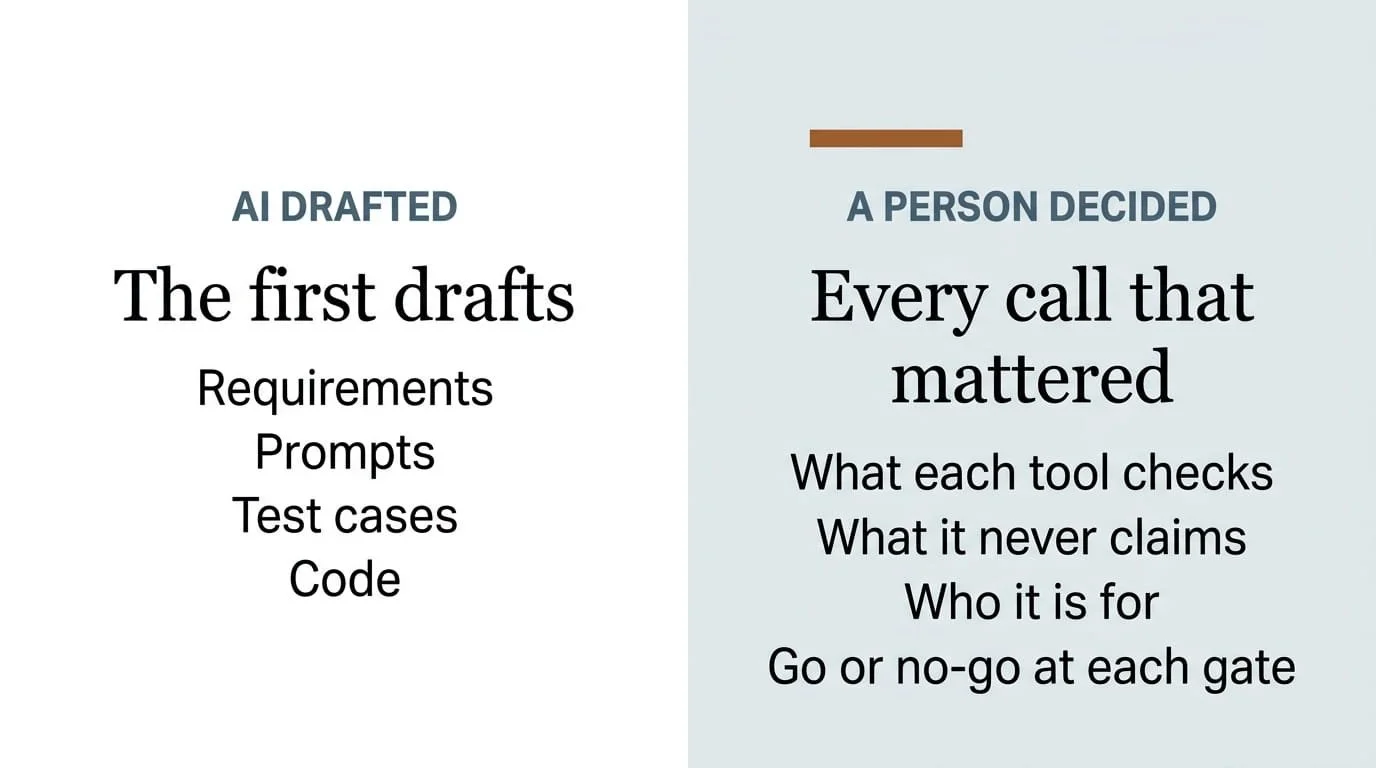
I built the free AI Brand Truth Check in 10 days, without a development team. It checks whether a brand’s voice, claims, positioning, customer profiles, and retailer rules are clear enough for AI tools to use. Claude Code wrote the code and tests. A separate Claude session reviewed every report before it reached me. I made all the decisions and applied every change to the live site myself.
I'm Kara Lineal, a marketing executive for consumer products, B2C, D2C, and B2B brands that want AI built into marketing operations. I have more than 20 years of experience building consumer brands and D2C e-commerce, including a D2C channel built to $5M at 65% margin, and I now apply agentic AI to the work.
Why I built an AI tool
When I kick off an engagement with a brand, I ask: Is the information your AI tools and agencies use written down, up to date, and in one place?
The honest answer is usually “partly.” The brand voice guide is two years old. Approved claims are buried in a legal email thread. Retailer rules sit in someone’s inbox.
I wanted to give marketing leads a free way to spot gaps in brand sources in about 8 to 12 minutes. Building that tool would normally take a developer, a designer, and a tester. I’m a marketer. So I asked: Could I lead the project and use AI as my engineering team?
Start with a plan, not code
I didn’t start by asking AI to “build me a tool.” I’ve managed enough launches to know the risk of building before everyone agrees on what done looks like.
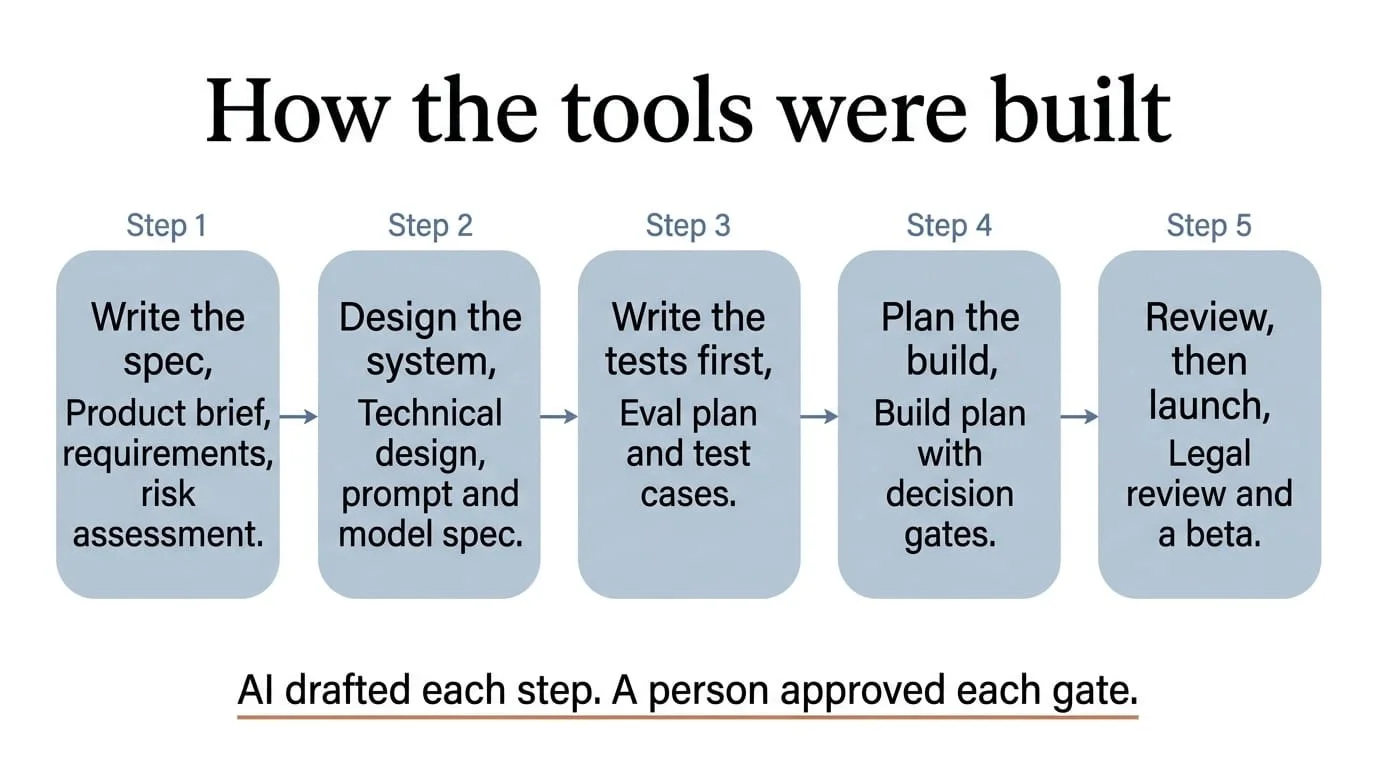
Instead, I worked with Claude to create the plan first:
A product brief explaining what the tool would do and who it was for.
Requirements, each with a test to confirm it worked.
A risk assessment.
Instructions for each AI-powered step.
A plan to evaluate the results.
A build plan.
A plan to launch and run the tool.
Before moving from one stage to the next, I answered open questions and approved the plan. By launch, the decisions log held more than 130 entries and the reasons behind them.
One decision, more than any other, showed why that planning mattered.
The rule that shaped the tool: rules decide, AI explains
The AI tool I built, the AI Brand Truth Check, uses fixed rules to calculate scores, brand readiness labels, risk level, top gaps, and recommendations. AI does not decide any of those results. If you give the same answers twice, you will get the same result.
AI has two jobs in the tool:
Review a pasted voice guide or claims list against a set checklist.
Write a summary in an emailed report, using the tool’s results.
The separation between fixed rules and AI matters. Marketers need results they can trust. If AI judged the same answers differently each time, that trust would disappear.
When “all tests pass” wasn’t enough
The build moved quickly with Claude Code typically reporting that every test passed. Most of the time, it was right.
The harder problems appeared where different parts of the system connected. Each part could work on its own while the full process still failed.
Here are three examples:
A spending limit that wouldn’t stop spending. The code treated a missing AI model price as $0. That meant AI calls could appear free, and the monthly spending limit would never kick in. Testing caught the problem.
A cleanup job that could lose subscribers. Email records were scheduled for deletion after 30 days. But the newsletter sync needed those same records. Anyone still waiting to sync could disappear from the process without flagging an error.
A sync that could undo an unsubscribe. We checked the email service’s actual responses before building the sync. Adding an existing contact again could subscribe them after they had opted out.
A quick click-through would not have caught these problems. Some could have stayed hidden for weeks, until they affected real users.
What helped: a second AI reviewer
What changed the outcome of the build was adding a reviewer. I used Claude in a separate session to review every report from Claude Code.
Its job was to challenge the work:
What could break?
What was missing?
Did the evidence support the claim that the work was complete?
That review caught the subscriber cleanup and re-subscription problems before any tester encountered them.
The rule I followed: AI builds, AI reviews, and I decide. Claude Code works on a test copy of the site. I approve each change, commit it, and run every update to the live site and its database myself.
How I built it
Step 1: A shared framework
Every question maps to the brand context kit I use for the brands I have managed. It covers materials such as:
Brand voice guidelines.
Approved claims.
Positioning and supporting proof.
Customer data and research.
Retailer requirements.
Product naming.
Rules for AI use by agencies and tools.
Disclosure and review requirements.
Common customer questions and approved answers.
The check scores 11 kit items. Using one framework kept the questions, code, tests, and reports aligned.
Step 2: Turn requirements into tests
I wrote each requirement in a simple format: “Given this situation, when this happens, this should be the result.”
Those requirements became automated tests. The tool now runs more than 800 tests with every change.
Step 3: Evaluations before AI goes live
Each AI feature has a set of 37 test cases. More than half are designed to tempt the model into mistakes, such as promising results to a user or mentioning a retailer the user never named.
I define what a good answer looks like. Before an AI feature goes live:
Its ratings must match my labels on at least 90% of checklist items.
Its summaries must earn an average score of at least 4 out of 5 from me.
No summary can score below 3.
Step 4: Build, review, fix, repeat
Claude Code builds the change and reports what it did. The second Claude session reviews that report and challenges anything unclear or unsupported.
Claude Code makes corrections. The loop continues until the review is clear, and I make the final decision.
Step 5: Check the test site before updating the live site
Nothing goes live until I check it on the test site, on both desktop and my phone.
The full workflow
I describe a change or approve a prompt the reviewer drafted.
Claude Code builds it on the test site.
The tests run and Claude Code reports the changes, test results, and judgment calls.
The reviewer checks the report and raises concerns.
Claude Code fixes the issues, repeating the review as needed.
I check the test site myself.
I commit the change.
I update the live database if needed and deploy the site.
I check the main functions and record the version so I can restore it if something goes wrong.
What I learned about building with AI
You don't need a development team to ship a real product anymore. However, I had to do the work of a product owner: define the result, test it, review edge cases, and own what went live.
The biggest bottleneck in coding an AI tool by using AI was me. Claude Code could write code faster than I could review it. My job quickly became less about building and more about making decisions.
The project also reinforced my AI tool's own lesson: My AI builder was only as good as the instructions and specs it worked from, the same way your AI tools and agencies are only as good as the brand material they work from.
6 principles for marketers who use this approach
The principles I recommend based on my experience with this process:
Write the requirements before building.
Use rules for decisions and AI for wording.
Give a second AI the review role, but keep final decisions yourself.
Test AI with examples designed to expose mistakes.
Personally approve every live update.
Simulate the effects of a rule change before releasing it.
Want to see where your own brand stands using my AI tool? It takes about 8 to 12 minutes. Take the free AI Brand Truth Check →
So tell me in the comments, what are you going to build?
Frequently asked questions (FAQs)
Do you need to know how to code?
I did not write the code. I read every report, approved every change, and updated the live site using short commands Claude explained step by step.
What tools did you use to build the AI system?
Claude Code: built the code and the tests.
Claude: a second session reviewed every report, drafted prompts, and checked vendor documentation.
Supporting services: serverless hosting and a database, an email service, and my existing website builder.
How long did the build take?
I built the tool in 10 days from planning and specs to a live beta test, without a development team.
AI-assisted research and drafting; independently reported, verified, and edited by the author.